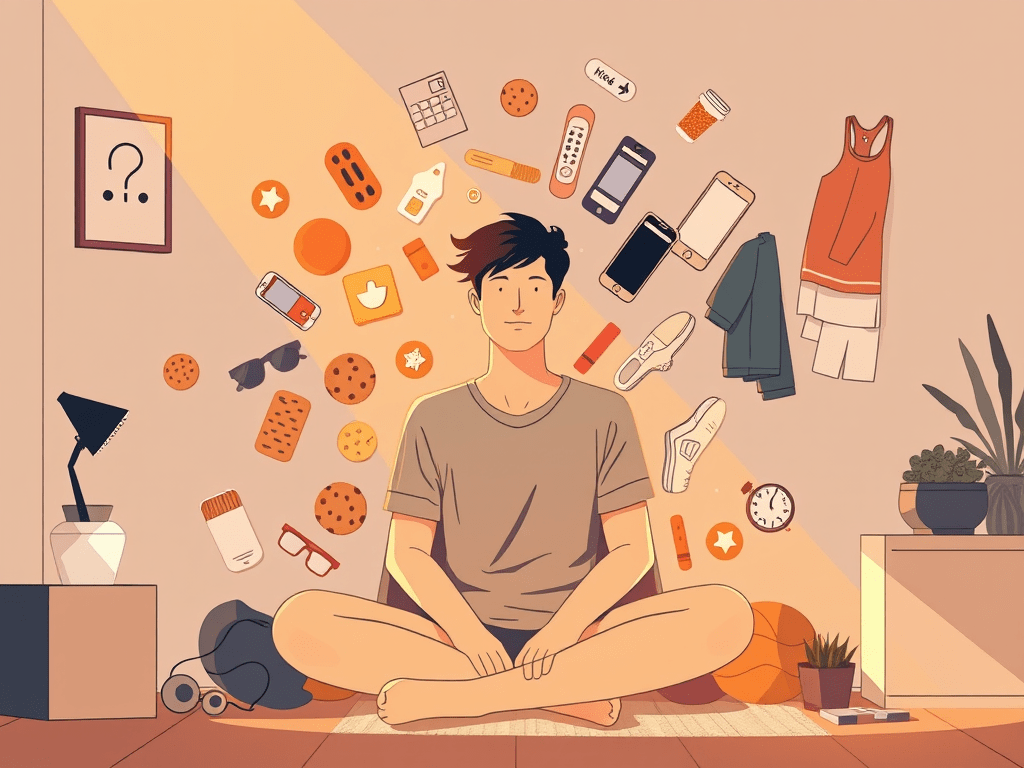
• Why Can’t I Stick to Habits? (Why Willpower Fails and What to do Instead)

    Why Motivation and Willpower Fail

    How many times have you decided to start a new habit, began strong and faded fast? Unfortunately, this is all too common. In fact, a study by Columbia University found that only 25% individuals who created New Year’s resolutions actually stuck to them after 30 days. That means, by the end of January, 75% of people had already lost sight of their initial goals, plans, and habits. Most people set goals for themselves, try to rely solely on willpower to keep them going, and end up stopping before the behavior really becomes part of their regular routine.

    But why does this happen?

    Relying on motivation and willpower alone aren’t enough to truly create behavior change. Why? Motivation fades. Willpower wanes. Not because humans don’t want to live their best lives or be disciplined, it’s because of everything else in life that gets in the way.

    That’s right – you aren’t failing at keeping healthy habits because you aren’t motivated enough – it’s because your systems aren’t working for you.

    Why Willpower Isn’t Enough

    Every day variables – whether big or small – impact both willpower and habit formation greatly. Let’s take a look at some factors that contribute to the creation, or prevention of, healthy living habits.

    Environment

    Environment influences your behavior more than willpower does. External stimuli impact how we react and respond, and effects decision-making processes. According to neuroscience research, external cues drive behavior. This isn’t surprising news! Think about every time you walk into the kitchen to find a plate full of cookies. You take one, maybe two, and come back again a few minutes later for another. That plate of sweets is a cue that creates the behavioral response of taking and eating a cookie. Without that place, you would not engage that that specific behavior, which decreases your sugar intake for that day.

    Another example of this is the proximity of your phone while you’re attempting to work or be productive. When it’s close by, the likelihood that you’ll reach for it and doom scroll increases (and your productivity decreases). On the other hand, without the environmental cue of your phone sitting within arm’s reach, you’re less likely to get up, get the phone, and scroll away from your work environment. This lack of distracting stimuli increases productivity and focus.

    On the flip side, placing a water bottle on your nightstand is a cue to drink up first thing in the morning. Getting your workout clothes together is not only a cue to workout, it makes this habit easier to implement in your daily routine.

    Takeaway: Making small changes to arrange your environment to decrease external cues that are distracting help make staying on track easier and more sustainable.

    Stress

    Stress isn’t necessarily a bad word. There is good stress – the kind that drives us to study for an important exam or practice for a competitive sporting event. Eustress – the good stress – improves performance. This makes tasks more motivating, more exciting, and is typically a short-term sensation that changes regularly. Distress – the bad stress – negatively affects performance and emotional health. This includes financial difficulties, work-related stress, and pressure from everyday life that feel unmanageable. These chronic stresses aren’t as easy to remedy and can become overwhelming and depleting.

    When distress is high, it is harder to take care of oneself – never mind try to create healthy habits. Maybe you are a single parent and all of the childcare duties are your sole responsibility, or your family is facing severe financial problems. These factors influence how you respond to your environment, the energy you have to put forth to creating a healthy lifestyle, and your access to valuable resources.

    Takeaway: Managing stress isn’t easy. Finding balance is key for setting yourself up for success.

    Reinforcement

    In behavior change terms, reinforcement refers to a consequence that increases the likelihood of that behavior occurring. That means something that directly follows a behavior (i.e. what happens right after) that makes that behavior happen again in the future.

    Consider this: You love hot showers. Hot showers are highly coveted as a busy parent. You get to relax, feel the warmth on your muscles, and enjoy the steamy aftermath in the bathroom. But – the only time you get to enjoy a hot shower is if you get the kids into bed by a certain time at night so you aren’t too exhausted to enjoy the activity. This creates an unwritten contingency in your nighttime routine. If I get the kids in bed by 8pm, I get to enjoy a hot shower alone, without kids climbing all over me. This increases the likelihood that you will start the bedtime routine at 7:15pm so the kids get in bed by 8pm. The reinforcement of taking the hot shower increased the overall behavior.

    When trying to create healthy habits, reinforcement plays an important role. Without it, what’s keeping you on track? Reinforcement is driven by motivation, but developing contingencies – written or unwritten – create systems that drive behavior. Think “if I do this, I get that”.

    Remember: Reinforcement looks different for everyone. We’ll discuss this more below.

    Small Changes that Make Habits Easier to Maintain

    Habits don’t happen by accident, and they don’t stick without intention. Intentionality = putting systems in place that work.

    Making small changes to your environment make a huge difference in your daily actions. Examples were mentioned above but also include small, simple changes like creating a realistic cleaning routine to keep your space tidy. This prevents the need to spend the entire weekend cleaning after working a demanding job all week. Keeping important documents in one spot is also a great way to design your environment to work with you, not against you. Place a calendar in a main area, on the refrigerator or by the door, for visual reminders of important events.

    Decreasing bad stress, as hard as it may be, is crucial to your overall well-being. Take time for yourself – even when it feels like your to-do list is never-ending and time is of the essence. Just 10 minutes to sit with a warm cup of tea and a good book can make all the difference. Doing some skincare, putting on simple makeup, or taking a few moments to breathe (or meditate) in the quiet are quick ways to experience calm. Spend a couple extra minutes in the car before going in the house – no one will know and it’ll help you relax before facing the chaos.

    Think about what reinforces your behavior. What motivates you to do something again, and again.. and again? What can you write into a contingency that will consistently increase your behavior in order to gain access to it? This is different for every person. Sometimes, it’s a tangible item that you’re yearning for. Other times, it’s the internal feeling of gratification or praise received from others. Whatever it may be, remember that reinforcement must increase the likelihood of engaging in a certain behavior in the future. If it doesn’t increase your behavior, it isn’t reinforcement, and it’s time to go back to the drawing board.

    Better Systems = Sustainable Habits

    Creating a system that works for you creates the best outcome for habit formation. Relying on willpower and motivation alone will leave you frustrated, disappointed, and dissatisfied with your health and wellness journey. A system that works for your lifestyle (including current environment, stress levels, and reinforcement options) will make all of the difference in your healthy habits.

    Remember: The problem isn’t you, it’s your systems. Create better ones to really see an improvement in your overall well-being.

    Follow along for more ways to create a healthier lifestyle with tips based on behavioral science 😊

  • Living a healthy lifestyle is not always about hitting the gym for hours a day, spending hundreds of dollars on supplements every month, or creating the “perfect” daily routine. Spoiler: perfect doesn’t exist because -cough- life happens. When responsibilities take up most of our time every day, it can feel impossible to take care of ourselves. Fortunately, wellness is about focusing on the whole self – not just one or two aspects of our lives.

    Being in a busy stage of life (kids, school, a demanding job, etc.) can make taking care of our whole selves feel daunting, exhausting, and utterly unrealistic. Good news: making a few small, minor changes every day can make a HUGE impact on your overall well-being.

    When you don’t have the time or mental energy to devote to overhauling your current lifestyle, these 5 simple tips can make all the difference in your wellness journey!

    Keep Water on the Nightstand

    Wellness is not about reinventing the wheel. Staying hydrated is crucial for keeping your body healthy and your energy levels up. Struggling to drink enough throughout the day? Fill up a highly preferred water bottle (I also like using a quart mason jar with a lid!) and put it on your nightstand when you go to bed. Chugging it before bed may not be the best idea, but doing so right when you wake is. Right when you sit up in bed, before you do anything else, drink some water. Carry the water bottle with you during your morning routine and continue to sip. This simple strategy helps you up your water intake before you’re ready to start your day.

    Note: This is something your body may need to get used to. If you aren’t accustomed to drinking water first thing in the morning, you may experience some stomach upset. Good news is that your body gets used to the hydration and the discomfort subsides!

    Establish a 10-Minute Self-Care Routine

    As a busy mom, full-time employee, or someone who just struggles to make time for themselves, having a quick, simple, no-frills self-care routine is invaluable. For many of us, a 7-step skincare routine filled with expensive products and ingredients you can’t pronounce is not in the cards – especially, not on a daily basis.

    Instead, opt for a quick self-care routine that includes a few things that help you feel calm, mentally collected, and put together. This will look different for everyone, but can include a face washing session that isn’t rushed, some hot tea and a warming pad, or application of smoothing hair mask. Personally, my 10-minute self-care routine roughly consists of drinking some water, washing my face without a child tugging on my shirt, and an exfoliating face mask. Then, if there’s time, I’ll really splurge and apply some simple skincare before heading about my day.

    This routine sounds simple and almost mundane, but to me, it is everything. I don’t get a chance to do these things without my kids around or while I’m not absolutely exhausted very often, so it feels amazing when I do.

    Plan for Snacking

    Are you a grazer? Do you get pulled into the habit of stopping by a fast-food place every day on the commute home from work, just to get a little “snackie-snack” that then ruins your appetite for dinner? Do you have a child under 5 who asks for a snack the second you get into the car?

    If you fit into any of these categories, I recommend always keeping healthy snack items on your person – for yourself and for anyone else who may feel a pang of hunger while on the go. These include vegetables in a baggie, hand-held fruit, and anything else that can be munched on quickly while in the car or during transitions from place to place. This will decrease the chances of stopping by the fast-food joint and keep money in your wallet. Before leaving the house in the morning, throw a few snacks in your lunch bag just in case – you’ll be happy you did!

    Set Alarms

    Quick reminder: We are human. We schedule things, forget them, and end up scrambling to get everything done. When it comes to important things, such as paying a bill, calling to schedule an appointment, or filling out a registration form for your kids’ soccer team, setting an alarm can help you remember, get it done, and feel more accomplished.

    For things that don’t have such a rigid timeline but are still important to you, setting an alarm is a great reminder to keep up with your healthy habits! For example, if you’re trying to get in bed earlier, set an alarm to start the kid’s bedtime routine, an alarm to start your bedtime routine, and an alarm with the time you actually want to be in bed. It sounds excessive but these reminders help you stay on track when life gets hectic and time gets away from you. Using alarms as reminders = habits you’ll actually stick to.

    Psst: It’s fine to set multiple alarms. Life gets busy! Reminders are more than okay.

    Quick Dance Party

    Physical activity and regular movement are incredibly important to overall health. But sometimes, there is just not enough time in the day to get changed, make it to the gym, get in a solid workout, and get home before the workday begins. Sometimes, you’re just not mentally in the right place to want to take care of your physical well-being.

    Cue the fun, energetic dance workouts that YouTube has to offer! There are SO many to choose from. Some are longer and more geared towards breaking a sweat, while others are meant to be fun, silly, and welcoming for all ages. When you’re feeling down or just not in the mood to take care of yourself, turn on a 10-minute Disney dance video, recruit your kids, and have a blast. The music and the movement will improve your mood instantly – and it counts as a workout, too!

    Living a healthy lifestyle and focusing on your wellness doesn’t have to be hard, time-consuming, or exhausting. These tips are simple to implement, quick to do, can be done anywhere, anytime. Make these 5 habits part of your everyday wellness routine and you’ll be feeling fabulous in no time!

    Follow for more tips on improving your overall well-being 😊

  • Rethinking Productivity Through a Behavioral Lens

    In a world obsessed with efficiency, we often treat productivity as a matter of willpower or motivation. Yet, despite the abundance of planners, apps, and color-coded calendars, many of us still find ourselves procrastinating, distracted, or overwhelmed.

    Behavioral science offers a refreshing alternative: instead of relying on motivation, it focuses on observable behaviors and environmental influences. Through the lens of behaviorism, time management isn’t a personality trait—it’s a skill that can be learned, shaped, and reinforced over time.


    The Behavioral Science of Productivity

    Behaviorism, a field pioneered by psychologists like B.F. Skinner, studies how our environment and reinforcement history shape behavior. When applied to productivity, this perspective helps us ask more practical questions:

    • What cues make me start (or avoid) work?
    • What consequences keep me engaged—or distracted?
    • How can I gradually shape productive habits that last?

    By analyzing these behavioral patterns, we can replace self-blame with strategy and create systems that naturally support focus and consistency.


    1. Control the Antecedents: Set the Stage for Focus

    In behaviorism, antecedents are the triggers or cues that occur before a behavior. They’re the signals that tell your brain what’s coming next.

    For productivity, antecedents might include your workspace, sounds, time of day, or even your mental state. These cues can either promote focus or invite distraction.

    Behavioral Strategy:

    • Design a focus-friendly environment. Create a workspace associated only with productive activity—avoid mixing it with leisure or rest.
    • Use consistent cues. Play the same instrumental playlist, light a candle, or adjust lighting to signal “work mode.”
    • Reduce competing stimuli. Silence notifications, use “do not disturb” settings, or keep your phone in another room.

    When your environment reliably signals focus, your brain learns to respond automatically—reducing the mental effort required to start.


    2. Reinforce the Behavior You Want to See

    Behaviorism teaches that behaviors increase when they’re followed by reinforcement—a consequence that makes the behavior more likely to occur again.

    In productivity, the problem is often delayed reinforcement. Checking social media or watching a video provides instant gratification, while finishing a long project offers delayed rewards. This imbalance makes distraction more reinforcing than deep work.

    Behavioral Strategy:

    • Use micro-rewards. After completing a focused work block, reward yourself with a short walk, stretch, or cup of coffee.
    • Track visible progress. Progress bars, streak trackers, or visual checklists provide immediate reinforcement by making success tangible.
    • Make breaks reinforcing. Schedule enjoyable activities between focus sessions—small doses of reinforcement keep momentum strong.

    When work behaviors become naturally rewarding, consistency follows.


    3. Shape Small Behaviors Toward Bigger Goals

    One of the most powerful principles in behaviorism is shaping—reinforcing small steps that gradually lead to a more complex behavior.

    When people try to overhaul their productivity overnight, they often fail because the gap between their current and ideal behavior is too large. Instead, behavior change sticks when it’s built progressively.

    Behavioral Strategy:

    • Start with short, attainable work sessions (even 10 minutes).
    • Reinforce initiation—celebrate the act of starting, not just finishing.
    • Gradually increase task duration or complexity as smaller successes accumulate.

    This incremental approach builds behavioral momentum—the tendency for consistent behavior to persist once it’s established.


    4. Manage Avoidance and Procrastination

    Avoidance behaviors—like procrastination—are not signs of laziness. They’re functional responses that reduce uncomfortable emotions like stress, fear, or uncertainty.

    From a behavioral perspective, avoidance is negatively reinforced because it removes that discomfort, even temporarily. Unfortunately, this short-term relief strengthens the avoidance cycle.

    Behavioral Strategy:

    • Clarify the next small action. Ambiguity fuels avoidance. Define tasks in concrete terms (e.g., “write the intro paragraph” instead of “work on blog”).
    • Use the five-minute rule. Commit to working for just five minutes. Once you start, momentum often takes over.
    • Pair difficult tasks with comfort. Use environmental reinforcement—pleasant music, a cozy setting, or your favorite drink—to make the task more approachable.

    By reducing the emotional “cost” of starting, you make productive action easier to choose.


    5. Track Behavior and Feedback Loops

    Self-monitoring is a cornerstone of behavioral change. Tracking your time use or task completion increases awareness and helps identify patterns of reinforcement.

    Rather than judging yourself, think of this as data collection—objective feedback that helps you adjust your environment or schedule.

    Behavioral Strategy:

    • Use a simple time-tracking app or notebook to log focused work sessions.
    • Review patterns weekly: when are you most productive? What triggers distractions?
    • Use this insight to shape your environment—scheduling difficult tasks when you’re most alert and minimizing exposure to distractions during those times.

    Feedback creates self-awareness, and self-awareness strengthens control.


    6. Build Systems, Not Self-Blame

    Behaviorism reminds us that behavior is predictable and modifiable—it doesn’t require superhuman discipline. When productivity falters, it’s not a personal failing; it’s feedback that your environment or reinforcement structure needs adjustment.

    Reframe your mindset:

    • Instead of “I need more willpower,” ask “What conditions make this easier?”
    • Instead of “I failed to focus,” ask “What was reinforced instead?”
    • Instead of relying on motivation, focus on designing reinforcing systems that sustain action even when motivation dips.

    Over time, these systems make productivity feel less like a struggle and more like a natural pattern of behavior.


    The Takeaway: Productivity Is a Learned Behavior

    When you view time management through the behavioral lens, it becomes clear: productivity isn’t about character—it’s about contingencies.

    By managing antecedents, arranging reinforcement, and shaping small, consistent behaviors, you can build a sustainable productivity system that supports your goals and well-being.

    Behavior change is gradual but powerful. Each small, reinforced step builds momentum toward habits that stick—not because you forced them, but because your environment and reinforcement patterns made them easy, rewarding, and automatic.

    In the end, the science of behavior doesn’t just make you more productive—it helps you design a life that works with your natural patterns, not against them.

    Want to learn how to apply behavior science to your daily routines? Explore more evidence-based wellness strategies at Behave and Bloom, where behavior change meets practical living.

  • Sleep is one of the most fundamental behaviors that supports health, mood, and cognitive functioning—yet it’s often the first thing we sacrifice when life gets busy. From late-night scrolling to inconsistent bedtimes, modern habits can easily erode our sleep quality. But rather than viewing sleep issues as failures of willpower, behavioral science offers a more compassionate and effective approach: one grounded in environmental cues, reinforcement patterns, and gradual behavior shaping.

    Understanding sleep through a behavioral lens helps us see that our nighttime rest is not an isolated event—it’s a learned behavior influenced by context, consistency, and consequences. With that perspective, we can create lasting improvements in our sleep hygiene without relying on drastic changes or rigid routines.


    What Is Sleep Hygiene?

    Sleep hygiene refers to the habits, environmental factors, and behaviors that promote healthy, restorative sleep. This includes:

    • Maintaining a consistent sleep schedule
    • Creating a relaxing bedtime routine
    • Managing light, temperature, and noise in your environment
    • Avoiding caffeine, alcohol, or screens before bed

    While these are common recommendations, they’re often presented as a checklist rather than a system of learned behaviors. From a behavioral standpoint, the key question becomes: What makes these habits stick?


    Behavioral Foundations of Sleep

    Behavior analysis looks at sleep as a behavior influenced by antecedents (what happens before sleep), the behavior itself (falling asleep and staying asleep), and consequences (what happens after sleep). Understanding this ABC framework allows us to identify what strengthens or weakens sleep-related habits.

    1. Antecedents: Setting the Stage for Sleep

    Antecedents are the cues or triggers that signal it’s time to engage in a certain behavior. In the context of sleep, these cues might include:

    • Dimmed lights and quiet surroundings
    • Changing into pajamas
    • Brushing teeth or reading a book
    • A consistent bedtime

    When our environment reliably signals that sleep is coming, the body learns to respond by winding down. Conversely, inconsistent cues—like watching TV in bed, working on a laptop, or scrolling social media—can blur the line between wakefulness and rest. The bed becomes associated with stimulation rather than sleep, making it harder to transition when it’s actually time to rest.

    Behavioral Tip:
    Create a predictable pre-sleep routine that tells your body “it’s time to rest.” This might include dimming lights 30 minutes before bed, doing light stretching, or engaging in calming sensory experiences like aromatherapy or soft music. The key is consistency—the more often these cues precede sleep, the stronger their signal becomes.


    2. Behavior: The Act of Falling Asleep

    Falling asleep isn’t just biological—it’s behavioral. We often try to “force” sleep, but that control-based mindset can actually backfire. From a behavioral standpoint, lying awake and worrying about not sleeping functions as an avoidance behavior—we try to escape discomfort (restlessness, anxiety), but the focus on the problem keeps the nervous system active.

    One behavioral approach to improve this is stimulus control therapy, a technique developed within behavior therapy. It helps re-establish a strong connection between the bed and sleep by reinforcing sleep-related behaviors and reducing wakeful ones.

    The basic rules include:

    1. Go to bed only when sleepy.
    2. Use the bed only for sleep and intimacy—no TV, phones, or work.
    3. If you can’t sleep after 15–20 minutes, get up and do a quiet, non-stimulating activity until drowsy.
    4. Wake up at the same time every day, regardless of sleep duration.
    5. Avoid daytime naps (or limit them to short, early naps if needed).

    Over time, these contingencies strengthen the association between your bed and sleep, while weakening the connection between your bed and wakefulness.


    3. Consequences: Reinforcement and Sleep Behavior

    Consequences determine whether a behavior is likely to occur again. Sleep behaviors are maintained through natural reinforcement—the relief of rest, improved mood, and increased energy after a good night’s sleep. However, many modern habits accidentally reinforce the opposite pattern.

    For example, consider staying up late watching a show. The immediate reinforcement (enjoyment, entertainment) outweighs the delayed benefit of a full night’s rest. Over time, these short-term rewards shape our behavior toward late-night stimulation rather than consistent sleep.

    Behavioral Tip:
    Shift reinforcement to support sleep-promoting behaviors. Reward yourself for sticking to your bedtime routine—perhaps with a cozy ritual, self-praise, or noting progress in a journal. Also, reduce the reinforcement for late-night wakefulness by making wake activities less stimulating (e.g., dim lighting, no screens).


    Environmental Design: Shaping Sleep Behavior

    In behavior analysis, the environment is the most powerful tool for change. Instead of relying on self-control, you can design your surroundings to make healthy sleep behaviors more likely.

    Key environmental strategies:

    • Light exposure: Use bright light in the morning to cue wakefulness and dim light in the evening to promote melatonin release.
    • Temperature: Keep the room cool (around 65°F is often ideal).
    • Sound: Reduce unpredictable noise or use white noise for consistent background sound.
    • Technology boundaries: Keep devices out of the bedroom or set an automatic “night mode” to reduce blue light and stimulation.

    By shaping your environment, you decrease the response effort required for good sleep and increase the likelihood of success without relying on willpower alone.


    Behavioral Momentum and Sleep Consistency

    One of the biggest challenges in sleep hygiene is consistency—especially when life gets unpredictable. Behavioral science offers a useful concept here called behavioral momentum, which refers to the idea that behaviors reinforced under stable conditions are more likely to persist even when disrupted.

    To build momentum, start with small, easy-to-maintain behaviors:

    • Going to bed just 15 minutes earlier
    • Turning off screens 10 minutes before bed
    • Doing one relaxation exercise each night

    As these small actions become routine, they create a behavioral “flow” that makes further improvements easier. Rather than overhauling your entire routine, focus on steady progress. The consistency itself becomes reinforcing—especially once you start feeling the natural rewards of better rest.


    Managing Sleep Disruptors: A Functional View

    When sleep problems persist, behavior analysts look at function rather than fault. What purpose is the late-night scrolling serving? Often, it’s a way to escape stress or seek comfort. Understanding the function of these behaviors allows for more compassionate, effective interventions.

    For example:

    • If scrolling reduces anxiety: Replace it with a calming alternative like guided relaxation or journaling.
    • If late-night productivity feels rewarding: Build structured time for that same sense of accomplishment earlier in the day.
    • If insomnia creates frustration: Practice acceptance-based strategies—acknowledging wakefulness without judgment, reducing arousal that keeps you awake.

    Functional thinking helps identify what maintains the problem behavior and how to replace it with a more adaptive one.


    Tracking Progress and Reinforcement

    Sleep improvement is gradual, and like all behavior change, tracking progress helps maintain motivation. You can use a sleep log to record:

    • Bedtime and wake time
    • How long it took to fall asleep
    • Perceived sleep quality
    • Behaviors before bed

    Tracking not only provides feedback but also acts as reinforcement. Seeing patterns and small wins builds a sense of mastery—a key driver of long-term consistency.


    Final Thoughts: Sleep as a Learned Behavior

    Viewing sleep hygiene through a behavioral lens removes blame and replaces it with strategy. Sleep isn’t something we “fail” at—it’s a complex behavior that can be shaped, reinforced, and improved through intentional design and consistent practice.

    By focusing on the antecedents, behaviors, and consequences that surround sleep, you can gradually build an environment and routine that support restorative rest. And once good sleep becomes a reinforced habit, it creates ripple effects—improving mood, health, and resilience in every other area of life.

    Behavior change doesn’t happen overnight—but better sleep just might.

  • When most people think about healthy eating, they picture food rules, calorie counts, and endless “shoulds.” But from a behavioral science perspective, sustainable nutrition has little to do with willpower—and everything to do with reinforcement.

    The truth is, your eating habits are not shaped by motivation or moral strength. They’re shaped by your environment, consequences, and learning history—in other words, the behavioral systems around you.

    By using principles from behavior analysis, you can build reinforcement systems that support healthy eating without falling into the traps of diet culture: guilt, restriction, or shame. Let’s explore how.


    1. Moving Away from Diet Culture—and Toward Behavior Change

    Diet culture thrives on punishment. It teaches us to label foods as “good” or “bad,” to view hunger as weakness, and to see the number on a scale as a measure of worth.

    From a behavioral standpoint, this approach relies on aversive control—using guilt, fear, or deprivation to suppress behavior. But aversive control rarely leads to sustainable change. It might stop a behavior temporarily (like eating dessert), but once the punishing stimulus (a strict diet) is removed, the old habits quickly return.

    True, lasting change comes from positive reinforcement—adding desirable outcomes after a behavior to increase the likelihood it will happen again.

    So, instead of punishing yourself for eating “wrong,” it’s far more effective (and humane) to build a system that makes healthy eating feel good.


    2. The ABCs of Eating Behavior

    In Applied Behavior Analysis (ABA), the foundation of behavior change is the ABC model:

    • Antecedent: What happens before the behavior (cues or triggers)
    • Behavior: The action itself (eating habits)
    • Consequence: What happens after (how it’s reinforced or punished)

    When applied to eating, the model might look like this:

    • Antecedent: Feeling stressed after work.
    • Behavior: Snacking on chips while watching TV.
    • Consequence: Temporary comfort and distraction.

    If that consequence feels reinforcing, the behavior will likely continue.

    To shift habits, we don’t rely on guilt or restriction—we simply adjust the antecedents and consequences to make healthier behaviors more reinforcing.


    3. Start with Awareness, Not Judgment

    Before making changes, it’s essential to observe your eating patterns without assigning moral value. Behavior analysts call this objective observation—noting the what, when, and why of your actions without emotional labels.

    Try keeping a simple record for a few days:

    • What times do you usually eat?
    • What emotions or situations lead to snacking or overeating?
    • What foods or routines help you feel good physically and emotionally?

    This information is your behavioral “baseline.” It helps you identify what’s reinforcing your current eating patterns—and what new reinforcers you might introduce.


    4. Reinforce Nourishing Behaviors, Not Restrictive Ones

    Reinforcement doesn’t mean bribing yourself with treats. It means pairing healthy eating behaviors with positive outcomes.

    For example:

    • After preparing a balanced meal, take a few moments to notice how you feel—calm, satisfied, proud.
    • Reinforce yourself with enjoyable, non-food rewards (like watching your favorite show, journaling, or taking a walk).
    • Use positive self-talk (“I’m taking care of myself”) instead of self-criticism.

    These pairings help your brain associate healthy eating with positive emotions, rather than stress or shame. Over time, the behavior itself becomes intrinsically reinforcing.


    5. Build Small, Reinforceable Habits

    One key behavior analytic principle is shaping—reinforcing small steps toward a larger goal. Instead of overhauling your diet overnight, start with one or two simple, achievable behaviors.

    For example:

    • Adding one serving of vegetables to your lunch.
    • Drinking water before your morning coffee.
    • Eating one meal at the table instead of in front of a screen.

    Each small success creates an opportunity for reinforcement. The goal isn’t to be perfect—it’s to create a pattern of behaviors that are realistic, repeatable, and rewarding.

    Remember: consistency builds momentum, and momentum becomes habit.


    6. Use Environmental Design as a Reinforcement System

    Your environment is one of the strongest determinants of your eating behavior. You can use antecedent strategies to make healthy choices more accessible and reinforcing.

    Practical examples:

    • Keep cut-up fruits and veggies at eye level in the fridge.
    • Store less-nourishing snacks out of immediate reach (not banned, just less convenient).
    • Set the table with care, even for simple meals—this makes the experience more rewarding.
    • Pair meal prep with something you enjoy, like music or a podcast.

    Each small environmental cue acts as a prompt or reinforcer, shaping your eating habits automatically.


    7. Reinforce Mindful Eating, Not Just “Healthy” Eating

    Healthy eating isn’t just about what you eat—it’s also about how you eat.

    Many people rush through meals, eat while multitasking, or ignore hunger cues because they’ve been taught not to trust their bodies. A reinforcement system can help rebuild that trust.

    Try reinforcing mindful eating behaviors, such as:

    • Taking a few deep breaths before eating.
    • Checking in with hunger and fullness cues mid-meal.
    • Savoring flavors and textures.

    Each time you practice mindfulness around food—and notice how much better you feel afterward—you reinforce self-awareness and self-regulation, both of which support sustainable health behaviors.


    8. Make Reinforcement Immediate and Meaningful

    For reinforcement to be effective, it needs to be:

    1. Immediate: The consequence should follow closely after the behavior.
    2. Consistent: The reinforcement should occur regularly, especially in the early stages.
    3. Valued: It must actually matter to you.

    In the context of eating, delayed rewards like “better health in six months” often aren’t motivating enough. Instead, focus on immediate reinforcers:

    • Feeling energized after eating balanced meals.
    • Reduced bloating or brain fog.
    • Emotional relief from eating regularly instead of restricting.

    Over time, your body’s natural feedback (like improved mood or energy) becomes the most powerful reinforcer of all.


    9. Be Aware of Punishers That Disrupt Progress

    Just as reinforcement increases behavior, punishment decreases it. Unfortunately, many “healthy eating” plans rely on punishers—like guilt, body shaming, or extreme restriction.

    Punishers may suppress behavior temporarily, but they often create rebound effects: bingeing, emotional eating, or giving up entirely.

    If you notice that your eating plan feels stressful, rigid, or anxiety-inducing, that’s a signal that punishment—not reinforcement—is driving the behavior. The fix? Remove the punisher and replace it with compassionate reinforcement.


    10. Reinforce Flexibility and Self-Compassion

    Behavioral health isn’t about rigid consistency; it’s about adaptive consistency—the ability to maintain helpful patterns while adjusting to life’s changes.

    That means reinforcing flexibility as a skill:

    • If you eat fast food on a busy day, acknowledge it without shame and move on.
    • Reinforce the behavior of returning to your nourishing habits the next meal.
    • Celebrate recovery from all-or-nothing thinking.

    Every time you treat yourself with kindness instead of criticism, you strengthen a pattern of resilient behavior. Over time, self-compassion becomes reinforcing in itself.


    11. Maintenance: Keeping Reinforcement Systems Sustainable

    Behavioral maintenance depends on intermittent reinforcement—rewarding behavior occasionally rather than every time.

    Once a new eating habit feels natural, you don’t need to reinforce it constantly. Instead, shift to more subtle reinforcers: the way your body feels, your sense of calm during meals, or the joy of sharing food with others.

    Healthy eating then becomes not a “goal,” but a lifestyle supported by consistent, natural reinforcement.


    Final Thoughts: Redefining Reinforcement and Health

    When you remove diet culture from the equation, healthy eating stops being about perfection and starts being about connection—to your body, your environment, and your values.

    Reinforcement systems aren’t about control; they’re about support. They help align your daily actions with long-term well-being—through kindness, awareness, and positive consequences.

    By using behavioral principles to shape how you eat—not what you “should” eat—you create a sustainable, empowering relationship with food that celebrates nourishment, not restriction.

    In the end, healthy eating isn’t a set of rules.
    It’s a reinforced behavior pattern of self-care—and one that you can shape, one small, positive consequence at a time.

  • Most people start a new exercise routine with the best of intentions—motivated, inspired, and ready to change. But after a few weeks, that motivation fades, life gets in the way, and exercise becomes one more item on the “I’ll get to it later” list.

    If this sounds familiar, you’re not alone. Research shows that nearly 50% of people who start a new exercise program drop out within the first six months. But what if the problem isn’t willpower or motivation at all? What if it’s the way we approach behavior change itself?

    By applying the principles of behavior analysis, we can better understand what drives consistent physical activity—and, more importantly, how to make it last.


    Understanding Exercise Through a Behavioral Lens

    Behavior analysis, rooted in the science of Applied Behavior Analysis (ABA), focuses on understanding how the environment shapes behavior. When it comes to exercise, this means looking at antecedents (what happens before a behavior), behaviors (the actions themselves), and consequences (what happens after the behavior).

    This model, often called the ABC framework, helps us pinpoint why certain exercise routines stick while others fade out.

    For example:

    • Antecedent: Seeing your running shoes by the door.
    • Behavior: Going for a 20-minute jog.
    • Consequence: Feeling accomplished and relaxed afterward.

    If those consequences are reinforcing (i.e., they feel good), you’re more likely to repeat the behavior. But if the consequences are punishing—like soreness, boredom, or frustration—you’re less likely to continue.

    The goal is to design your environment and routines so that exercise becomes automatically reinforcing.


    1. Identify What’s Actually Reinforcing for You

    One of the most common mistakes people make is assuming they “should” like a particular type of exercise. Maybe everyone around you is into weightlifting, yoga, or running—but that doesn’t mean you will be.

    In behavior analysis, reinforcement is individual. What’s rewarding for one person might not be for another.

    If you dread the gym, forcing yourself to go each day is unlikely to lead to consistent behavior. Instead, experiment with different forms of movement until you find what naturally feels good—whether it’s dancing, walking, hiking, swimming, or doing yard work.

    Ask yourself:

    • What forms of movement make me feel energized or relaxed afterward?
    • What activities do I look forward to (or at least don’t mind doing)?
    • What kinds of environments (indoors, outdoors, group classes, solo workouts) motivate me most?

    The more reinforcing the activity, the less you’ll need to rely on motivation.


    2. Build Routines Around Small, Observable Behaviors

    Behavior change works best when it’s specific and measurable. Instead of setting vague goals like “work out more,” focus on observable behaviors you can track.

    For example:

    • “Do 15 minutes of yoga after I wake up.”
    • “Take a 10-minute walk after lunch.”
    • “Do three sets of squats and push-ups before dinner.”

    These small, repeatable actions are easier to build into your daily life—and easier to reinforce.

    The principle of shaping (reinforcing successive approximations of a desired behavior) also applies here. Start small, celebrate success, and gradually build up. You don’t need to go from sedentary to marathon runner overnight. The key is consistency over intensity.


    3. Use Antecedent Strategies to Set Yourself Up for Success

    Antecedents are the cues or triggers that prompt behavior. By arranging your environment strategically, you can increase the likelihood of engaging in movement.

    Try these behavioral antecedent strategies:

    • Visual prompts: Keep your workout clothes or shoes in plain sight.
    • Scheduling: Add exercise to your calendar like a non-negotiable appointment.
    • Social accountability: Plan movement with a friend or join a class.
    • Context pairing: Pair exercise with something you enjoy, like listening to music or a favorite podcast.

    These small environmental tweaks can cue the behavior automatically—making it easier to start, even when motivation is low.


    4. Reinforce Consistency, Not Perfection

    In behavior analysis, reinforcement is the backbone of learning. However, many people unintentionally reinforce inconsistency instead.

    Here’s how that happens:
    You set a big goal—say, an hour-long workout five days a week. You miss one session, feel guilty, and then skip the rest of the week. The avoidance of guilt becomes the reinforcer, and soon you’ve dropped the routine entirely.

    Instead, focus on reinforcing any instance of movement.
    If you walked for five minutes, that’s a success. If you stretched before bed, that’s progress. Reinforce it—mentally, emotionally, or even tangibly.

    Examples of reinforcement strategies:

    • Keep a streak calendar and reward yourself after consistent days.
    • Write down how you feel after each workout to track natural reinforcers.
    • Use positive self-talk: “I followed through on my plan today.”

    By focusing on what you did do, you strengthen the behavior, making it more likely to occur again.


    5. Track Your Data and Adjust Based on Behavior, Not Feelings

    Behavior analysts rely on data to measure progress objectively. Feelings fluctuate, but data tells the story of consistency.

    Track simple data points:

    • Frequency (How often did you move this week?)
    • Duration (How long did you engage in movement?)
    • Intensity (How challenging was it?)

    Then review the data regularly. If you notice a dip, look for patterns in antecedents and consequences. Were you more consistent when you exercised in the morning? Did bad weather disrupt your routine? Did certain activities make you feel more accomplished?

    Use that information to adjust your plan. Behavioral change isn’t about perfection—it’s about functional adaptation.


    6. Reduce Punishing Consequences

    Sometimes, we unintentionally attach punishers to exercise—things that make the behavior less likely to occur in the future. These might include:

    • Painful soreness
    • Negative self-talk (“I’m so out of shape”)
    • Boring routines
    • Inconvenient logistics (e.g., long drives to the gym)

    If any part of your exercise routine consistently feels punishing, it’s time to modify it. That might mean lowering the intensity, changing the location, or reframing your self-talk.

    For example, instead of saying “I have to work out,” try “I’m choosing to move my body to feel better.” This small linguistic shift reframes exercise from an obligation into a form of self-care—changing the consequence from negative to reinforcing.


    7. Harness the Power of Habits and Behavior Chains

    In behavioral terms, a behavior chain is a series of linked actions that lead to a final goal. You can build an exercise habit by linking it to an already established routine.

    For example:

    • After I brush my teeth → I’ll do 10 squats.
    • After I start the coffee pot → I’ll stretch for 5 minutes.
    • After work → I’ll walk around the block before going home.

    These “if-then” contingencies tie new behaviors to stable patterns, increasing the likelihood they’ll occur automatically over time.


    8. Replace Motivation with Systems of Reinforcement

    Motivation feels great—but it’s unreliable. Behavioral consistency doesn’t come from motivation; it comes from systems.

    Build systems that make movement the default choice.
    For instance:

    • Sign up for classes with cancellation fees (a natural consequence).
    • Keep exercise equipment in your living space.
    • Reward yourself after every session with something small (a warm shower, favorite snack, or downtime).

    By designing a reinforcement system around movement, you reduce the need to rely on fleeting internal motivation.


    9. Apply Self-Management Strategies

    Behavior analysis emphasizes self-management—the ability to observe, record, and regulate your own behavior.

    Try these self-management tools:

    • Goal setting: Define clear, achievable objectives.
    • Self-monitoring: Track workouts or movement in a journal or app.
    • Commitment response: Make a public or written commitment to increase accountability.
    • Delayed reinforcement: Save enjoyable rewards (like watching a show) until after you move.

    Each of these techniques teaches your brain that movement leads to positive outcomes—strengthening the behavioral habit loop.


    10. Celebrate Generalization and Maintenance

    Behavior change is only successful if it maintains over time and generalizes across settings. That means your new behavior—movement—should persist even when routines change.

    To encourage this:

    • Practice movement in different contexts (at home, outside, in a gym).
    • Keep reinforcement schedules varied (some immediate, some delayed).
    • Reflect regularly on your progress to keep awareness high.

    The goal isn’t rigid adherence—it’s developing a lifestyle where movement feels natural and rewarding, no matter the setting.


    Final Thoughts: Behavior Change in Motion

    Exercise isn’t just about building muscle or burning calories—it’s about shaping a consistent behavior that aligns with your values and well-being.

    When you view movement through a behavioral lens, you take the mystery out of “motivation” and focus instead on what actually works: consistent reinforcement, smart environmental design, and self-awareness.

    Behavior change is not about perfection—it’s about patterns. By analyzing and shaping your own patterns of behavior, you can transform exercise from a chore into a natural part of your daily life.

    Consistency doesn’t come from pushing harder—it comes from designing your world so movement becomes the easy, rewarding choice.

  • Behavioral science can teach us how to develop healthy coping skills

    Life inevitably brings stress, challenges, and uncertainty. Whether it’s a demanding job, family responsibilities, financial pressures, or unexpected events, everyone experiences times when they need to cope. The difference often lies not in whether we face stress, but in how we respond to it.

    Coping skills are the tools we use to manage stressors, regulate emotions, and adapt to difficult circumstances. While some people may seem naturally resilient, research shows that coping is not just an inborn trait—it’s a set of skills that can be developed, strengthened, and refined over time. And one of the most effective ways to build these skills is through behavior change.

    By applying principles of behavioral science, we can intentionally shape our actions and environment to foster healthier coping mechanisms. In this post, we’ll explore how behavior change strategies can help you build stronger coping skills and create systems that support your well-being.


    Why Coping Skills Matter

    Coping skills act like a buffer between stress and its impact on our health. Without effective coping, stress can escalate into chronic anxiety, depression, burnout, or even physical illness. With strong coping mechanisms, we’re more likely to stay calm, problem-solve effectively, and maintain our health even during difficult times.

    Behavioral researchers often divide coping strategies into two broad categories:

    1. Problem-focused coping – Taking direct action to address the source of stress (e.g., creating a budget to handle financial strain).
    2. Emotion-focused coping – Managing emotional responses to stress (e.g., practicing relaxation techniques or reaching out for social support).

    Both are valuable. The key is having a repertoire of coping behaviors to draw from—because different situations require different approaches.


    The Role of Behavior in Coping

    Coping isn’t just about what we think or feel—it’s also about what we do. Behaviors like deep breathing, journaling, exercising, or reaching out to a friend all influence how well we manage stress.

    However, unhelpful coping behaviors can also develop, such as avoidance, excessive screen time, or substance use. These behaviors may provide short-term relief but often make stress worse in the long run.

    Behavior science gives us tools to increase the likelihood of engaging in healthy coping strategies while reducing reliance on maladaptive ones.


    Behavior Change Principles That Strengthen Coping Skills

    1. Identify and Define the Behavior

    The first step in behavior change is clarity. Instead of saying “I want to cope better with stress,” define specific coping behaviors you want to practice. For example:

    • Taking a 10-minute walk when overwhelmed.
    • Practicing a breathing exercise before bed.
    • Writing down three things you’re grateful for daily.

    Concrete, observable actions are easier to track and reinforce than vague goals.


    2. Use Antecedents to Your Advantage

    Antecedents are the cues or triggers that occur before a behavior. By structuring your environment, you can make positive coping skills more likely.

    • Visual cues: Keep a journal and pen on your nightstand as a reminder to reflect before sleep.
    • Time cues: Set a daily reminder to practice a short meditation.
    • Location cues: Designate a calm space in your home for stress-relief practices.

    These cues reduce reliance on willpower and increase automaticity.


    3. Reinforce Positive Coping Behaviors

    Reinforcement is central to behavior change. When coping behaviors feel rewarding, we’re more likely to repeat them.

    Reinforcement can be:

    • Intrinsic: The natural relief you feel after exercising or meditating.
    • Extrinsic: A reward you give yourself for completing a coping behavior, such as listening to a favorite podcast after journaling.

    The important part is recognizing and celebrating the effort. Even a simple checkmark on a habit tracker can provide reinforcement.


    4. Start Small and Build Momentum

    Coping behaviors don’t have to be elaborate. In fact, starting small increases success. Instead of committing to 30 minutes of meditation, begin with two minutes. Instead of journaling a full page, start with one sentence.

    This principle, known as shaping, allows you to reinforce gradual progress, building momentum toward more robust coping habits.


    5. Practice Consistency, Not Perfection

    Behavioral research emphasizes that occasional lapses don’t erase progress. What matters most is returning to the coping skill as soon as possible.

    Consistency builds automaticity, and over time, coping behaviors can become habits that are easier to access even during stressful moments.


    6. Replace, Don’t Just Remove, Unhelpful Coping Behaviors

    It’s difficult to simply stop an unhelpful coping behavior. Instead, replace it with a healthier option. For example:

    • Instead of scrolling on your phone when anxious, try a grounding technique like naming five things you see.
    • Instead of stress-eating, drink water or step outside for fresh air.

    This substitution approach redirects the need for coping into more constructive outlets.


    7. Build Social Reinforcement

    Coping doesn’t have to be a solo effort. Share your coping goals with supportive friends or family, or join a group that encourages healthy stress management (like a yoga class or support group).

    Social reinforcement—praise, encouragement, accountability—can make coping behaviors more rewarding and sustainable.


    Examples of Behaviorally-Informed Coping Skills

    Here are practical coping strategies that align with behavior change principles:

    • Breathing exercises: Use a specific cue (like closing your laptop) to trigger three deep breaths.
    • Exercise: Anchor short walks to existing routines, such as after meals.
    • Mindfulness or meditation: Pair a brief mindfulness practice with morning coffee.
    • Journaling: Keep a notebook in a visible spot to increase the likelihood of use.
    • Progressive muscle relaxation: Practice before bedtime to reinforce sleep readiness.
    • Gratitude listing: End each day with three positive reflections.
    • Social connection: Schedule regular check-ins with friends or loved ones.

    Each of these can be shaped, cued, and reinforced to become a consistent part of daily life.


    Coping Skills Across Different Stressors

    Behavior science also shows us that coping strategies may need to be tailored depending on the situation:

    • Work stress: Time management tools, structured breaks, and exercise are effective problem-focused strategies.
    • Emotional overwhelm: Grounding exercises, journaling, and mindfulness can help regulate emotions.
    • Chronic stressors: Long-term routines, social support, and consistent self-care become especially important.

    The key is flexibility. Building a toolbox of coping strategies allows you to adapt to the demands of each unique challenge.


    The Long-Term Payoff

    When coping skills are built through behavior change, they become reliable, repeatable, and often automatic. Over time, this has several benefits:

    • Resilience: You recover more quickly from setbacks.
    • Self-efficacy: You gain confidence in your ability to manage stress.
    • Health: Effective coping reduces the risk of stress-related illness.
    • Well-being: You’re better able to enjoy life even in the face of challenges.

    Just as poor coping habits can compound stress, healthy coping habits create a positive feedback loop—where each skill strengthens your ability to handle future stressors.


    Putting It Into Practice

    Here’s a step-by-step framework you can try today:

    1. Choose one coping behavior. For example, “Take three deep breaths before starting work.”
    2. Select a cue. Place a sticky note on your computer screen.
    3. Practice consistently. Each day, repeat the behavior when prompted by the cue.
    4. Reinforce yourself. Acknowledge the effort, and note how you feel afterward.
    5. Expand gradually. Once the behavior feels automatic, add another coping skill to your toolbox.

    Final Thoughts

    Coping is not about eliminating stress—it’s about equipping yourself to navigate it with resilience and clarity. By applying principles of behavior change, you can intentionally shape coping strategies that work for you.

    Motivation and willpower may fluctuate, but habits built through small, consistent actions create a foundation of strength. Over time, these coping behaviors become part of who you are—not just something you do.

    Behavior science reminds us that every action is an opportunity to reinforce the skills that help us thrive. By building coping skills through behavior change, you don’t just manage stress—you transform your relationship with it, cultivating resilience that lasts a lifetime.

  • What Behavior Science Teaches Us About Consistency

    When it comes to building healthier routines, sticking to exercise plans, or simply maintaining a new bedtime schedule, one question often comes up: How do I stay motivated?

    We often think of motivation as the fuel that drives our actions. It’s the inner spark that pushes us to lace up our running shoes or open the laptop to start that project. But motivation can be fickle—it fluctuates with mood, stress, environment, and even sleep. One day you’re inspired to tackle your goals, the next day you can’t seem to find the energy.

    Habits, on the other hand, operate differently. They’re the automatic behaviors we’ve rehearsed so many times that we no longer have to think about them. Brushing your teeth before bed, pouring a cup of coffee in the morning, or checking your phone after an alert—these actions don’t require much conscious effort.

    So, what does behavioral science teach us about the tension between motivation and habits? And more importantly, how can you use both to build lasting consistency in your life?


    Why Motivation Isn’t Enough

    Motivation is a powerful starting point. It often initiates change because it connects us to our goals and values. But behavior science shows that relying solely on motivation is risky:

    • It fluctuates. Research in psychology highlights that motivation can spike and drop due to stress, environment, and competing demands.
    • It’s context-dependent. You might feel motivated to exercise when you’re energized, but not after a long day at work.
    • It can be emotionally draining. Continually trying to summon motivation to “will yourself” into doing something consumes mental energy.

    Think of motivation as the match that lights a fire—it sparks action, but without a structure to keep the fire burning, the flame fizzles.


    Habits: The Science of Automaticity

    Habits, in contrast, run on autopilot. According to behavioral psychology, habits form through a process called contextual cueing. A behavior becomes tied to a specific cue in your environment—time of day, location, or preceding activity.

    For example, if you stretch every morning right after brushing your teeth, your brain begins to link those two actions. Over time, stretching becomes automatic in that context.

    A 2009 study by Phillippa Lally and colleagues found that it takes an average of 66 days for a new habit to become automatic—though the range varied widely depending on the behavior and person. Importantly, the study showed that missing a day didn’t break the habit-building process; rather, consistency mattered more than perfection.

    Behavior scientists often describe habits using the cue-routine-reward loop:

    1. Cue – The trigger that initiates the behavior (alarm clock, location, emotional state).
    2. Routine – The behavior itself.
    3. Reward – The reinforcement that makes the behavior satisfying.

    This loop is critical because rewards signal to your brain that the habit is worth repeating.


    Where Motivation and Habits Intersect

    It’s tempting to think of motivation and habits as opposing forces, but in practice, they work together. Motivation can get you started, but habits keep you consistent. The relationship looks like this:

    • Motivation fuels habit formation. At the start, when the behavior isn’t automatic, motivation helps you push through resistance.
    • Habits reduce dependence on motivation. Once a habit is established, it requires less mental energy and willpower to maintain.
    • Motivation can refresh and refine habits. Even with strong habits, motivation can help when you want to adjust routines or pursue new challenges.

    What Behavior Science Teaches About Consistency

    Consistency is the holy grail of behavior change. Here are key insights from behavior science on how to use motivation and habits together:

    1. Start Small and Build Gradually

    Trying to overhaul your life overnight is rarely sustainable. Behavioral research supports the principle of shaping—reinforcing successive steps toward a goal. Instead of committing to an hour of exercise daily, start with 10 minutes. As the behavior becomes habitual, gradually increase the intensity or duration.

    2. Use Cues to Your Advantage

    Design your environment to make desired behaviors more automatic. Want to drink more water? Keep a glass on your desk. Want to read before bed? Place a book on your pillow. Cues reduce the need for motivation by prompting the behavior naturally.

    3. Reinforce Behaviors with Rewards

    Habits stick when they feel rewarding. Rewards don’t have to be grand; even the satisfaction of checking off a task can release dopamine, reinforcing the routine. The key is to connect the habit with immediate positive feedback.

    4. Expect Motivation to Fluctuate

    Behavioral science emphasizes that variability is normal. Instead of waiting for motivation to return, focus on systems that make the behavior easier—like pre-packing your gym bag or scheduling reminders.

    5. Track Progress and Celebrate Small Wins

    Self-monitoring is one of the most effective strategies for maintaining consistency. Journaling, habit-tracking apps, or even a simple calendar checkmark can keep you accountable. Celebrating progress builds self-efficacy—the belief in your ability to control your environment and succeed.

    6. Pair Habits with Identity

    Research by psychologist Wendy Wood suggests that habits become stronger when they align with identity. Instead of framing a behavior as something you “should” do, connect it to who you want to be. For instance: “I’m the kind of person who takes care of my health” is more powerful than “I should work out.”


    Real-Life Example: Exercise

    Imagine two people with the same goal of exercising regularly.

    • Person A relies primarily on motivation. Some days they’re motivated and get to the gym; other days they’re tired or stressed, so they skip. Their exercise pattern is inconsistent.
    • Person B focuses on habit formation. They set a cue by leaving workout clothes by the door, start small with 15-minute sessions, and reward themselves with a post-workout smoothie. Over time, exercise becomes an automatic part of their routine.

    The difference isn’t who “wants it more”—it’s who builds the right system.


    Common Misconceptions

    1. “I just need more willpower.”
      Willpower is limited and depletes throughout the day. Systems and habits are more reliable than raw discipline.
    2. “Missing a day ruins my progress.”
      Studies show that missing one instance doesn’t erase the habit. What matters is resuming quickly.
    3. “Habits make life boring.”
      In reality, habits free up mental space. By automating routine behaviors, you can focus creativity and motivation on more meaningful goals.

    Putting It Into Practice

    Here’s a step-by-step strategy for applying these insights to your own goals:

    1. Clarify your why. Motivation starts with meaning. Identify why the behavior matters to you.
    2. Pick one small habit. Choose something manageable that you can do daily.
    3. Anchor it to a cue. Link it to an existing routine or environmental trigger.
    4. Reinforce it. Find a way to make it rewarding immediately.
    5. Track your progress. Use a journal, app, or simple checklist.
    6. Be patient. Remember that habit formation takes time—focus on consistency over intensity.
    7. Use motivation strategically. Tap into motivational boosts (like new goals or events) to refine or expand your habits.

    Final Thoughts

    Motivation may spark change, but habits sustain it. Behavioral science teaches us that consistency isn’t about waiting for the right mood or relying on sheer willpower. It’s about designing systems that make the right behavior the easy, automatic choice.

    By combining the spark of motivation with the stability of habits, you create a framework that doesn’t just help you start strong—it helps you stay steady for the long run.

    Whether your goal is healthier living, better productivity, or simply more peace of mind, remember: motivation might get you moving, but habits keep you going.

  • We spend thousands of words inside our heads every week. Much of that internal chatter — the “self-talk” we run on loop — quietly steers our moods, choices, and energy. The good news: self-talk is a behavior. That means it can be shaped, reinforced, and changed using the same, evidence-based behavioral tools we use to build any other habit. This post walks through practical, research-backed ways to reshape your self-talk so it supports well-being rather than undermines it.


    Why self-talk matters (and the evidence behind it)

    Self-talk isn’t just “pep talks.” Across domains, targeted self-talk interventions produce measurable benefits. For example, studies found that structured self-talk strategies produced a moderate, reliable improvement in task performance — especially when the self-talk was short, goal-directed, and practiced.

    Beyond performance, self-talk sits inside the broader self-regulation system. Albert Bandura, a renowned psychologist, studied social cognitive theory. His social-cognitive account describes how people use self-monitoring, self-evaluation, and self-reinforcement to regulate action — and self-talk is a core tool in that system (it cues, evaluates, and motivates behavior). Framing self-talk as part of self-regulation helps us see it as malleable and functional.

    Clinical and behavior-change research also shows that behavioral strategies which change actions (for example, behavioral activation for depression) can be as effective as cognitive change alone — and that changing behavior often shifts internal dialogue as a downstream effect. This supports an approach that blends self-talk work with action-focused strategies.

    Finally, simple tracking and feedback techniques (self-monitoring) reliably help people change habits like activity levels and sedentary time — behavior change techniques that pair well with self-talk interventions.


    A behavior-analytic framework for shaping self-talk

    Let’s utilize a few core behavioral tools and apply them to the internal voice:

    1. Antecedent control — make the helpful self-talk more likely to occur by arranging cues in your environment.
    2. Shaping — reinforce successive approximations of more helpful self-talk (start where you are, reward small wins).
    3. Self-monitoring — record instances of negative and positive self-talk to increase awareness and provide data.
    4. Self-reinforcement & contingency management — deliver small, reliable rewards for using adaptive self-talk.
    5. Prompting & scripting (self-instructional training) — use short, rehearsed phrases to cue momentary coping responses.

    Each tool is practical and scalable — from a sticky note by your desk to a habit-contract you sign with yourself.


    Step-by-step: A pragmatic plan to reshape self-talk

    Step 1 — Track your starting point (self-monitoring)

    For 5–7 days, jot down moments when your self-talk matters: before a meeting, after a mistake, when you exercise, or when you feel anxious. Record the situation, the thought (in one or two lines), and the immediate consequence (what you did next). Self-monitoring raises awareness and gives you data to shape change — and it’s one of the most evidence-supported behavior change techniques.

    Practical tip: Use a simple app note or a lined index card. Keep entries tight — date, trigger, phrase, behavior.


    Step 2 — Define a measurable target (operationalize)

    The term “Be more positive” is fuzzy and subjective Instead choose a measurable target like: “Replace the phrase ‘I always mess up’ with ‘I can learn from this’ at least once per day” or “Use a 5-second calming phrase before responding when upset.” Clear targets let you track progress and shape behavior.


    Step 3 — Create short, scripted phrases (self-instructional training)

    Dr. Donald Meichenbaum’s self-instructional training emphasizes short, rehearsed instructions that people can use in the moment to guide behavior (e.g., “Pause — breathe — do one thing”). These scripts work best when practiced, brief, and matched to the task. Start with 1–3 go-to phrases you can say silently or aloud.

    Examples:

    • “Notice — choose — act.” (pause + reappraise)
    • “Try one step.” (when overwhelmed)
    • “This is temporary.” (when anxious)

    Practice these scripts in low-stakes moments so they’re available when pressure and stress rises.


    Step 4 — Shape & reinforce small improvements

    Shaping means rewarding approximations. If your current self-talk is harsh, the first goal might simply be pausing before a critical phrase. Celebrate that pause (self-reinforce with a quick internal acknowledgement like “Good job noticing”). Then reinforce the next approximation: replacing the harsh phrase with a neutral one, then with a helpful one.

    Small, immediate rewards are powerful. Reinforcement doesn’t need to be physical — a self-verbal praise (“Nice catch!”), a tiny treat, a five-minute break — anything that reliably follows the target behavior.


    Step 5 — Use antecedent strategies and environmental prompts

    Make helpful self-talk more likely by placing cues where you’ll need them. Examples:

    • Put a two-word prompt on your phone wallpaper (e.g., “Breathe — Choose”).
    • Stick a short script on your bathroom mirror.
    • Schedule a 2-minute check-in on your calendar before stressful blocks.

    Antecedent control reduces reliance on willpower by nudging behaviors before the trigger occurs.


    Step 6 — Pair self-talk with action (behavioral activation)

    Research shows that doing activates mood and breaks negative cycles — changing behavior can change thinking. When you combine a self-talk script with a concrete action (e.g., “I’ll try one step” followed by a 10-minute focused task), you create immediate feedback loops that reinforce both the action and the new internal script. Over time, the self-talk becomes linked with productive behavior.


    Step 7 — Track, review, and adjust (data drives change)

    Use the notes from Step 1 to chart progress weekly: frequency of negative vs. helpful self-talk, contexts where change is easiest, and what rewards worked best. This data guides shaping: if a prompt isn’t working, change it; if a reward is fading, vary it.


    Example: From “I can’t” to “I can try one step”

    Sarah notices she thinks “I can’t do this” before client calls. She:

    1. Tracks each occurrence for a week.
    2. Chooses the target “Before each call, silently say ‘Try one step’.”
    3. Creates a prompt: a calendar notification 3 minutes before calls that reads “Try one step.”
    4. Shapes the behavior: first she receives self-praise for pausing, then for saying the script, then for saying it and completing the first action.
    5. Pairs the script with a tiny action: opening her notes and writing one bullet.
    6. Reviews data weekly and increases rewards (a coffee after three productive calls).

    Over weeks, the script becomes automatic; she reports less anxiety and more momentum.


    Troubleshooting common barriers

    • “It feels fake.” Start with neutral self-talk rather than overtly positive phrasing. “This is challenging” is easier to accept than “I’m amazing.” Shaping moves you gradually to more positive phrases.
    • “I forget to use it.” Add antecedent cues (calendar, phone wallpaper) and practice scripts out loud in safe moments.
    • “I slip back under stress.” Expect regression (extinction bursts happen). Return to self-monitoring and reinforce tiny successes — shaping is iterative.
    • “Nothing seems to change.” Check your contingencies: are you rewarding the new self-talk reliably? If not, make reinforcement immediate and certain for a period.

    Bringing it together: a short 2-week micro-experiment

    Week 1: Track for 5–7 days, pick 1 script, create two prompts, and decide on a small, immediate reward for each use.
    Week 2: Shape — reward pauses and script uses; pair script with one specific action; review your log at the end of the week and tweak prompts or rewards.

    Small experiments build behavioral momentum. Research on self-monitoring and targeted self-instruction shows that simple, structured interventions can reliably shift behavior and performance — and they translate readily to the internal voice.


    Final thoughts: compassionate pragmatism

    Self-talk is a behavior that evolved to help you survive and succeed. It isn’t a moral failing if your internal voice is critical — it’s learned. Use the same tools you’d use to teach any other skill: observe, script, practice, reinforce, and shape. Over time, those small nudges compound into a different internal culture — one that supports your decisions, calms your stress, and helps you move toward the life you want.

  • Welcome to WordPress! This is your first post. Edit or delete it to take the first step in your blogging journey.